
Sometimes the most valuable education in the world is just some good motherly advice. That was the case for Laura
Weidemann ’22 when she thought about applying for a clinical dietitian position at the world-renowned Johns Hopkins Hospital in Baltimore.
“As my mother reminds me often, ‘the answer is always no unless you ask,’” Weidemann said. “It’s important to apply even if the position seems out of reach.”
Mom was right, and it turned out the position wasn’t out of reach after all. Weidemann learned on the initial phone call that her impressive food systems research and volunteer experiences made her stand out from other applicants. She believes her willingness to say “I don’t know, but this is how I would find the answer” demonstrated her ability to solve problems independently. She landed the job, beginning her duties in June 2024.
“I have many clinical dietitian responsibilities at the Johns Hopkins Hospital, including assessing malnutrition, calculating tube feeding orders, and providing nutrition therapy for individuals with chronic diseases or experiencing acute conditions,” Weidemann said. “Each shift, I need to be prepared to float to any unit, from an oncology floor to GI surgery. I am most fulfilled when I have engaging education sessions with patients and families. I also find it rewarding to calculate tube feeding orders because it’s one of the most tangible ways we support patients.”
The research experience crucial in her being hired came during her time as a student at Viterbo University. Weidemann undertook summer research projects on food systems ethics, morals of eating, and a visual ethnography (the study of individual peoples and cultures) of an Iowan agricultural town. These projects even led to her and faculty member Dr. Matthew Bersagel-Braley working together to develop the first food ethics course at Viterbo, “Just Food–Putting Ethics Back on the Table.”
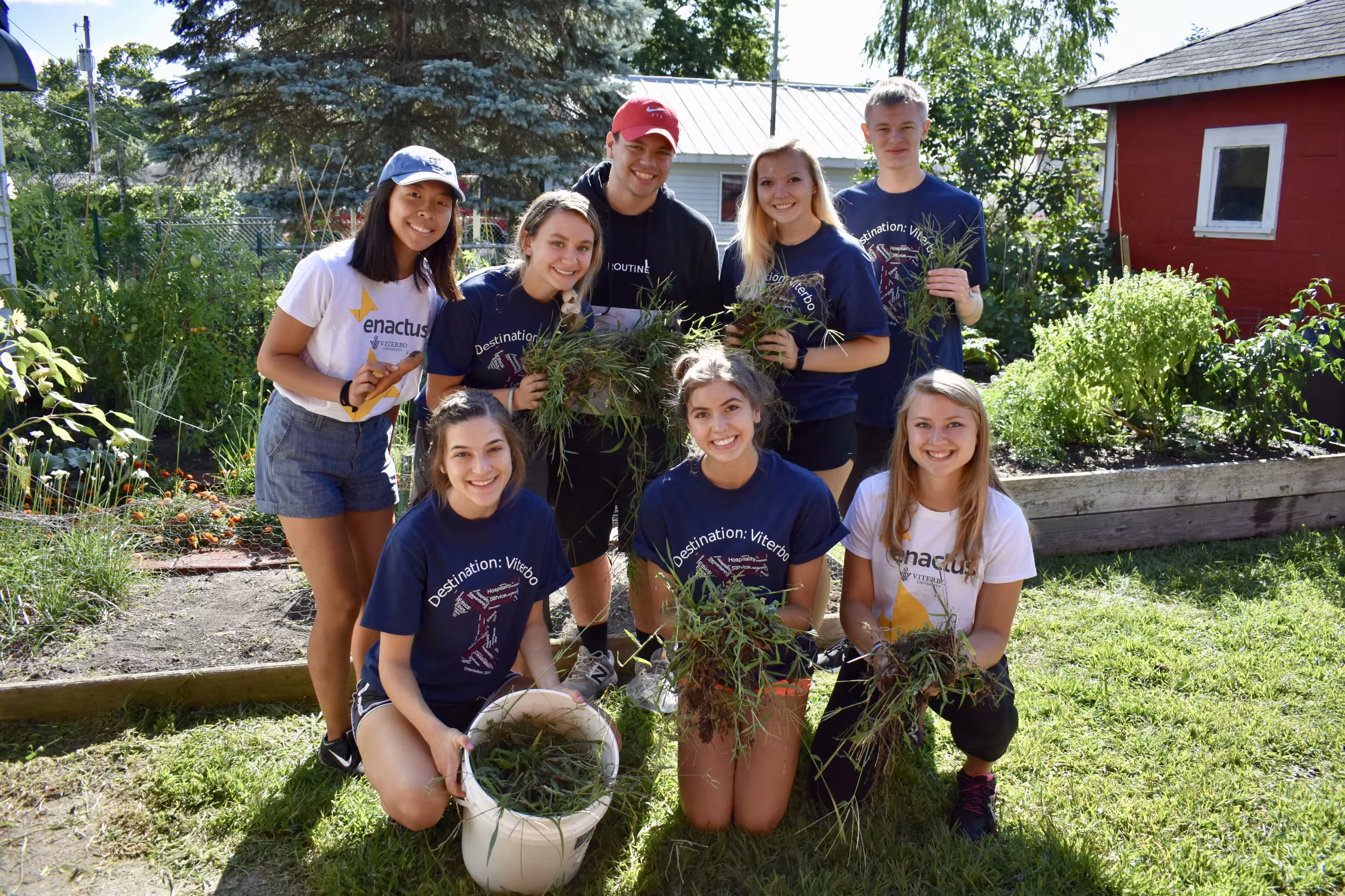
“Viterbo was an excellent choice for me,” Weidemann said. “My clinical and community internships gave me the hands-on experience I needed to succeed as a beginning dietitian. I really enjoyed my time at the university, especially my involvement in the honors program. My favorite experiences included creating art to submit to Touchstone, attending an interfaith conference, cultivating community gardens, and engaging professors in thought-provoking questions.”
Weidemann is now a student in the Master of Science in Public Health in Human Nutrition program in the Johns Hopkins Bloomberg School of Public Health. She has always been interested in community nutrition and food systems, but as a result of this graduate program, she also wants to learn more about nutrition policy and urban planning.
“I think dietetics is an amazing field because there are so many careers one can work toward,” Weidemann said. “After earning my graduate degree, I see myself teaching nutrition, leading a research team, and writing a children’s book about food systems. One day, I envision myself starting a nonprofit organization to improve food access, provide nutrition education, and support local food distribution.”